This is a guest post and was not written by Roaming Vegans.
Let me be clear from the start: I am not vegan. When I lived in Seoul, I was vegetarian. I spent eight months in Sinchon as an exchange student at Ewha University and did not eat meat the whole time, mainly because of climate change. Several of the friends I made there were vegan, though, and eating with them every week showed me how differently the city works when you also skip fish, eggs and dairy.
This is not a list of the trendiest vegan restaurants. When I lived there, Seoul had a real vegan restaurant hype, and most of the places we went to have since closed. The food scene moves that fast. Instead, this is what stays useful: where you will actually eat in Seoul, what goes wrong in each of those places, and the Korean sentences that solve most problems. Where I mention a restaurant I have not eaten at myself, I say so.
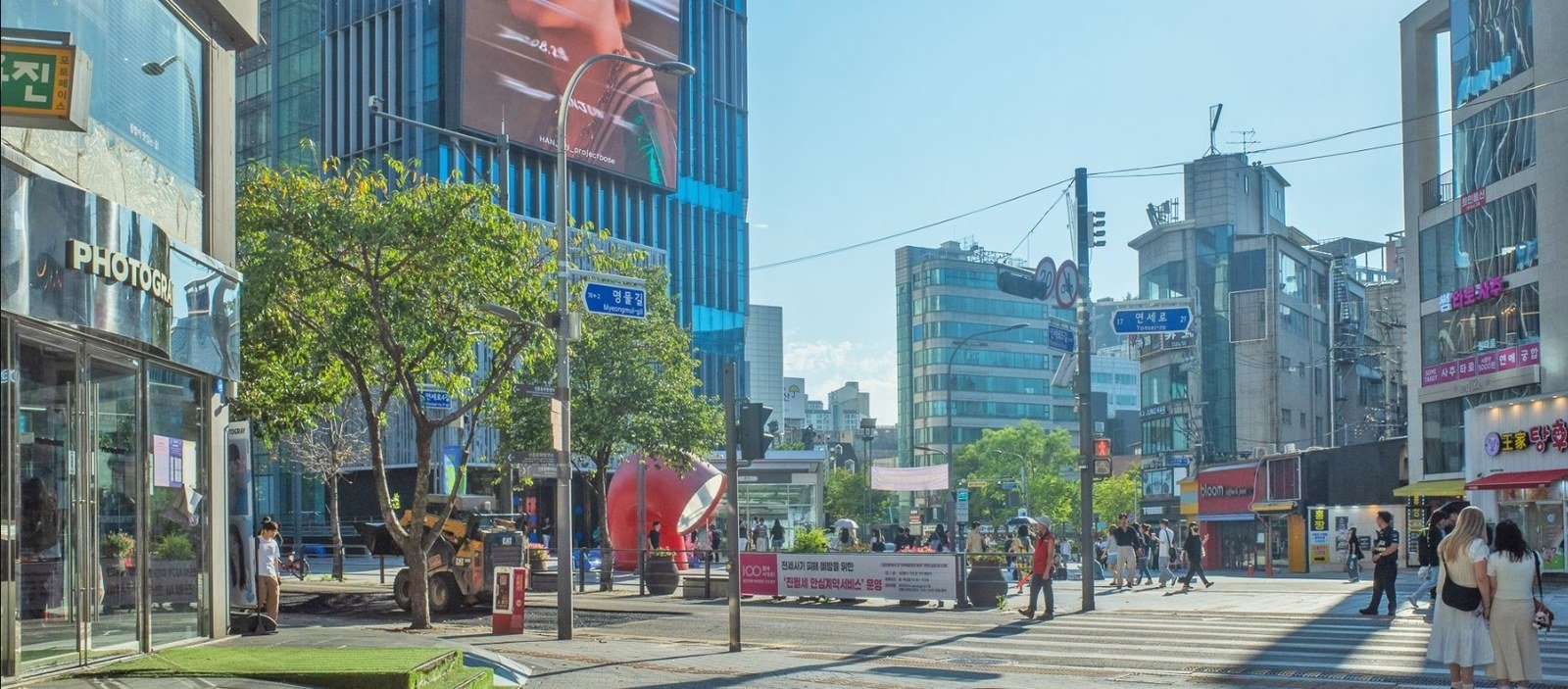
The one thing to understand first: it is the broth
Korean food looks like a vegan paradise at first. Rice, tofu, seaweed, mushrooms, greens and a table full of side dishes. The problem is usually invisible. Most soups, stews and many sauces start with a stock made from anchovies or beef, and seasonings often contain fish sauce or salted seafood. A dish can be nothing but vegetables in the bowl and still not be vegan. If you want to know what the most common dishes are before you go, my guide to Korean dishes explains them one by one.
As a vegetarian I was honestly not very strict about this. I had travelled in Thailand before, where fish sauce is in almost everything, so I accepted that some of it would end up in my food. If you are vegan, you cannot take that approach. The rule is to always ask about the base of a dish, not just about what you can see in the bowl.
The good news is that Korean has a word for exactly what you need: chaesu (채수), a vegetable stock. More and more restaurants understand it, and asking for it is often the difference between a dish you can eat and one you cannot.
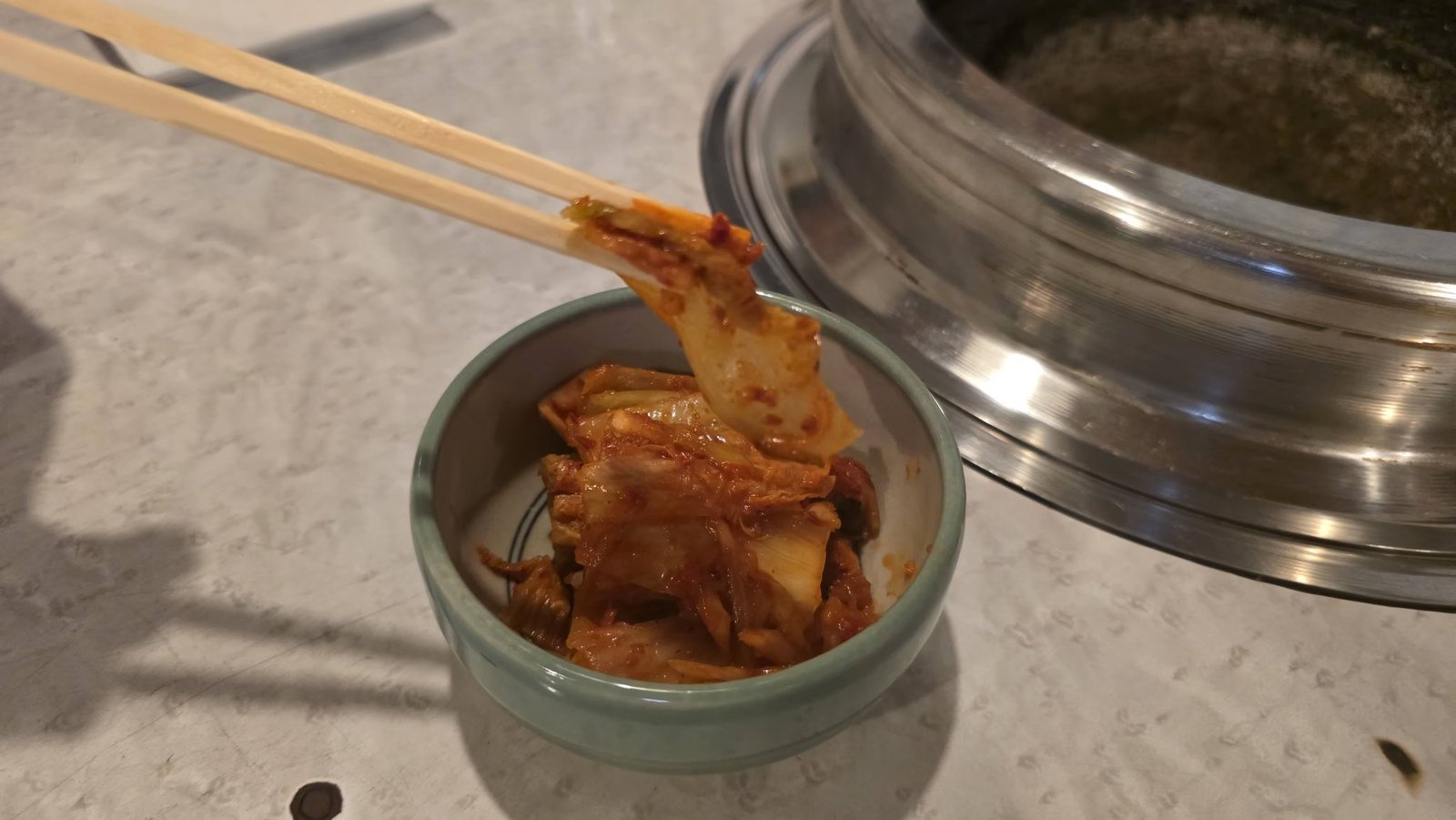
Gimbap shops: order it fresh
Gimbap, rice and fillings rolled in seaweed, was my everyday lunch. The rolls you find pre made in shops and convenience stores almost always contain ham, fish cake or egg. Small gimbap shops that roll everything to order are a different story. Because they make each roll in front of you, you can ask them to leave the animal fillings out.
My own guilty pleasure was a roll filled only with spicy chilli. Simple, cheap and very good. If you are vegan, ask for a roll with only vegetables and say clearly that you do not want egg, ham or fish cake. Show it written down rather than trying to explain it out loud.
Mala xiang guo: my favourite, with one big warning
My absolute favourite meal in Seoul was mala xiang guo, a spicy Chinese stir fry that is everywhere around the universities in Sinchon, the student area I describe in my Sinchon neighbourhood guide. You fill a bowl from a self service counter with vegetables, mushrooms, tofu and noodles, pay by weight, and the kitchen fries it in a numbing mala sauce. I ate it at least once a week, and lotus root was always my first pick.
For vegetarians it is easy because you choose every ingredient yourself. For vegans there is a catch: the mala base is often made with beef tallow, and the counter also holds fish balls and fish cakes that look a lot like tofu. If you are vegan, ask about the sauce before you fill your bowl.
Since then, some chains have started to offer a vegetable stock version. My tip for vegans is Sonogong Malatang (손오공 마라탕), which makes malatang and mala xiang guo vegan with chaesu if you ask for it. Even there, ask whether the spice base contains tallow, because recipes can change.
Street snacks in winter
If you visit in the colder months, the street carts are one of the easiest vegan options in the city. My favourite snack was roasted chestnuts (군밤, gunbam): warm, filling and nothing but chestnuts. Many carts also sell roasted sweet potatoes (군고구마, gungoguma), which are just as simple.
Be more careful with anything fried or filled. Batters and doughs can contain egg or milk, and many popular snacks, like the spicy rice cakes in red sauce, are cooked in fish stock.
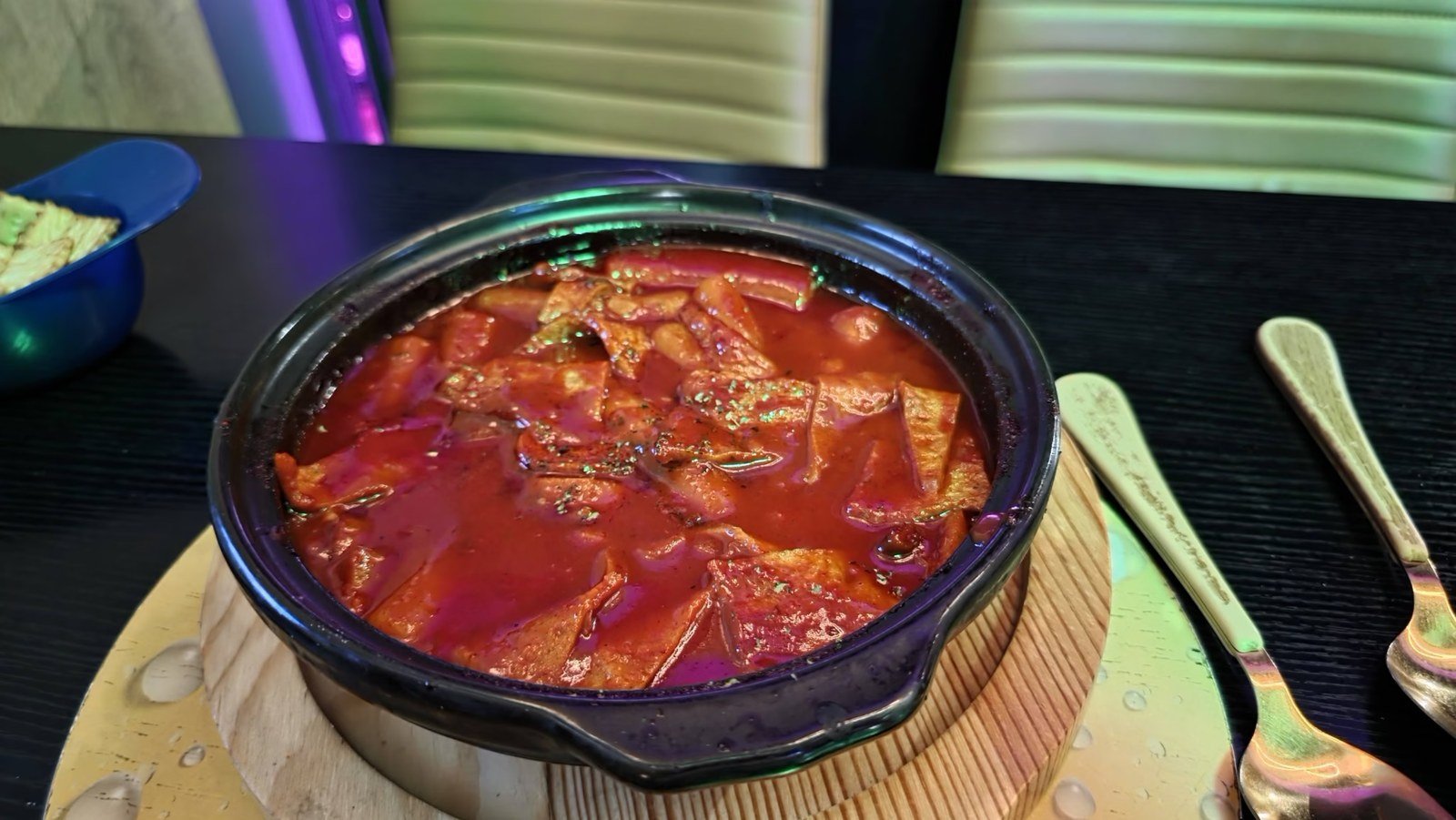
Tofu restaurants
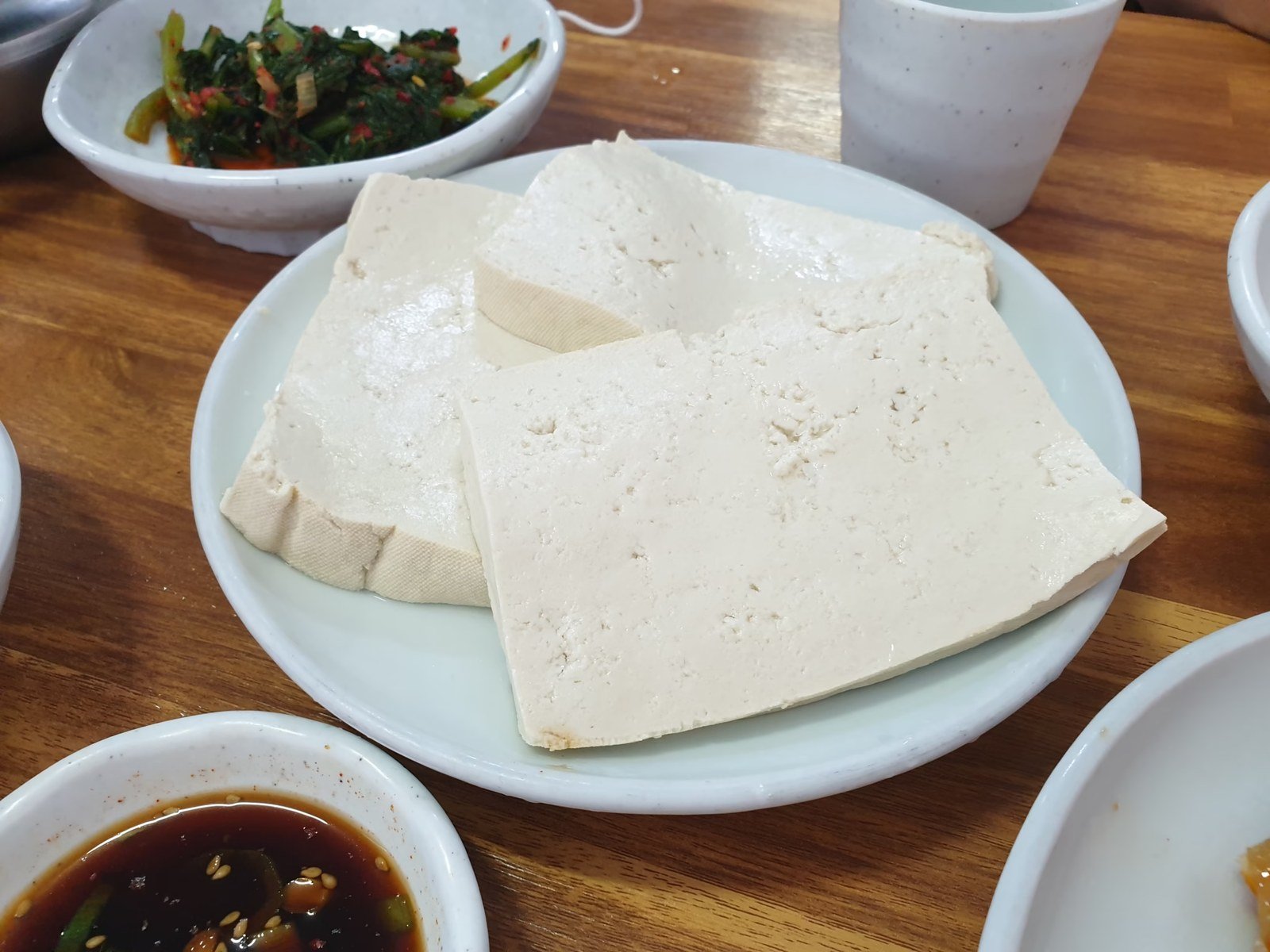
Korea makes excellent tofu, and the best of it is wonderfully plain. One tofu meal I still remember is Chodang style tofu, a soft white tofu from the Gangneung area made with seawater. Plain tofu dishes like this are among the most promising options for vegans.
Do not assume that every tofu dish is safe, though. The famous red soft tofu stew, sundubu jjigae, is usually made with seafood or meat and its stock, and often comes with a raw egg. Ask about the stock every time.
Temple food: a plant based tradition
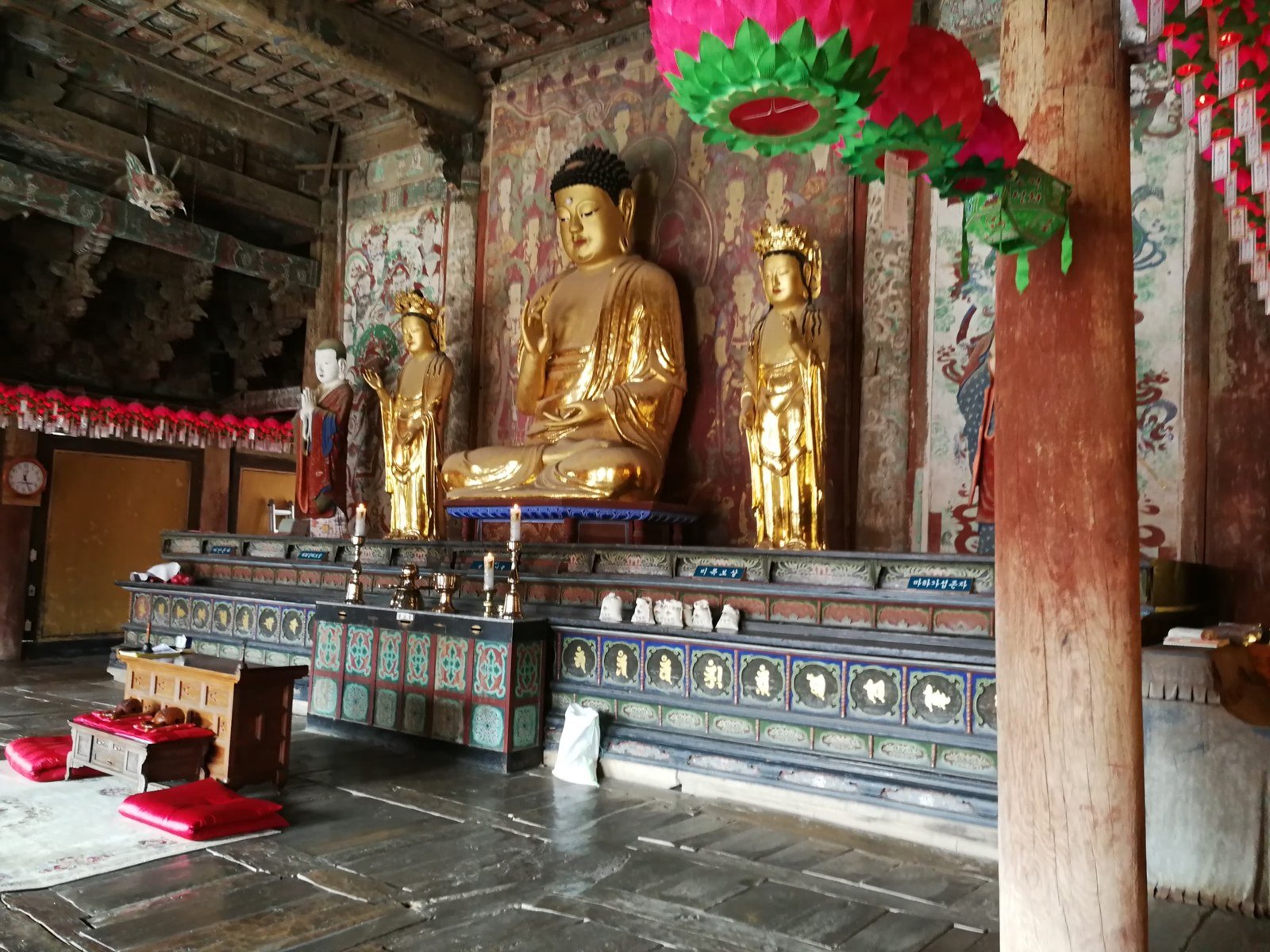
Korean Buddhist temple food is traditionally made without meat or fish, and it also leaves out pungent vegetables like garlic and onion. Official temple food guidance does allow dairy as an exception, so if you are vegan, still ask. If you want one special meal that needs very few questions, this is it.
The best known address in Seoul is Balwoo Gongyang (발우공양), a temple food restaurant run by the Jogye Order, on the fifth floor of the Templestay Information Center opposite Jogyesa Temple. It serves seasonal set menus and is popular, so reserve ahead. I never ate there myself, and I also never did a temple stay, so I cannot give you a personal review of either. Insadong, a short walk away, is a good area to combine with it.
Dedicated vegan restaurants
The only places where you never need to ask anything are restaurants that are fully vegan. They come and go quickly in Seoul, so I always recommend checking a current map on HappyCow rather than trusting any list, including mine. Itaewon, the most international neighbourhood, has the widest choice.
One example that has been around since 2022 is ALT.a in Itaewon, a fully vegan restaurant that cooks Korean Chinese classics like jjajangmyeon, the black bean noodles, and mapo tofu with plant based ingredients. I have not been there myself, so treat it as a tip to check, not a personal review.
Cafés and convenience stores
Seoul has an incredible café culture, and soy or oat milk has become a common option. It is worth asking for even when it is not on the menu board. Bakeries are harder, since butter, milk and egg are in most pastries.
I mostly skipped convenience store food because I wanted to eat more healthily, but if you rely on it, use a translation app to read the labels. Many triangle rice balls and ready meals contain tuna, ham or other animal products, even when the picture on the front looks harmless.
Korean sentences to save on your phone
My Korean was poor, so I never tried to explain my diet out loud. I wrote short notes on my phone and showed them to the staff, and it worked far better. These are the sentences I would save:
| Korean | Pronunciation | Meaning |
|---|---|---|
| 저는 비건이에요 | jeoneun bigeonieyo | I am vegan. |
| 고기, 생선, 계란, 우유 빼주세요 | gogi, saengseon, gyeran, uyu ppaejuseyo | Please leave out meat, fish, egg and milk. |
| 채수로 해주세요 | chaesuro haejuseyo | Please make it with vegetable stock. |
| 동물성 재료 들어가요? | dongmulseong jaeryo deureogayo? | Does it contain animal ingredients? |
| 우지 들어가요? | uji deureogayo? | Does it contain beef tallow? |
Show the whole note at once. Staff are usually patient and happy to help when they can read exactly what you need.
Is Seoul good for vegan travellers?
Better than its reputation, as long as you plan a little. Being vegetarian in Seoul was easy for me most of the time. Being vegan takes more effort, because the animal ingredients are often hidden in the broth and sauces rather than visible on the plate. But with a handful of safe habits, fresh gimbap, plain tofu, street chestnuts, temple food, dedicated vegan restaurants and the word chaesu, you can eat very well.
If you are vegetarian rather than vegan, I wrote a separate guide on eating vegetarian in Seoul with the dishes I relied on during my eight months in Sinchon.
About the author: Max is a Swiss travel writer from Solothurn. He spent eight months in Seoul as an exchange student at Ewha Womans University, where he was vegetarian, and now lives in Tokyo. He writes about Korea, Japan and Switzerland at maxonthemove.com. Instagram: @maxintokyo


