Sri Lanka still raises the same questions from hesitant nomads: is the wifi strong enough, can you stay longer than a month, and is it actually cheap?
After basing ourselves on the south coast for a few months (and touring the island by tuk-tuk), our short answer is yes – with a plan. Sri Lanka is a solid digital nomad destination in 2026 if you treat mobile data as your main connection, sort the visa early, and eat like a local.
What’s new since we first wrote this: a Digital Nomad Visa, free tourist ETAs for many passports (including Australia and the US), online visa extensions, and the coworking space we used in Dickwella has closed. Sri Lanka is still good value – just not “impossibly cheap” in every town after the 2022 currency crisis.
Let’s jump right in.
Table of Contents
Sri Lanka Digital Nomad Overview
| Best for | Budget remote work, vegan food, beaches + hill country weekends |
| Wifi reality | Weaker than Thailand/Bali – dual local SIMs + data is the reliable setup |
| Tourist ETA | 30 days (double entry); free for 40 nationalities from May 25 2026, including Australia and the US – apply before you fly at official eta.gov.lk (rules change; check that site before you travel) |
| Longer stays | Extend online or in Colombo up to 270 days from arrival, or apply for the Digital Nomad Visa (1 year) |
| Our monthly spend (2020, couple, Dickwella) | About $500 USD – historical; see Cost of Living for 2026 ranges |
| Vegan food budget | Local rice and curry / daal about $1–2.50 USD a meal; western vegan cafes much more |
Table of Contents
- Is Sri Lanka’s Wifi Strong Enough For Remote Work?
- Visas and Extensions (including the Digital Nomad Visa)
- Finding Accommodation in Sri Lanka
- Getting Around Sri Lanka Independently
- Sri Lanka Cost of Living for Nomads
- Vegan Nomad Food Budget
- Local Sri Lankan Food
- Sri Lanka’s Best Digital Nomad Towns
- Coworking Spaces in Sri Lanka
- Reasons To Visit Sri Lanka
- Local Attitudes Towards Foreigners
- Sri Lanka for Digital Nomads: Pros and Cons
- FAQ
Is Sri Lanka’s Wifi Strong Enough For Remote Work?
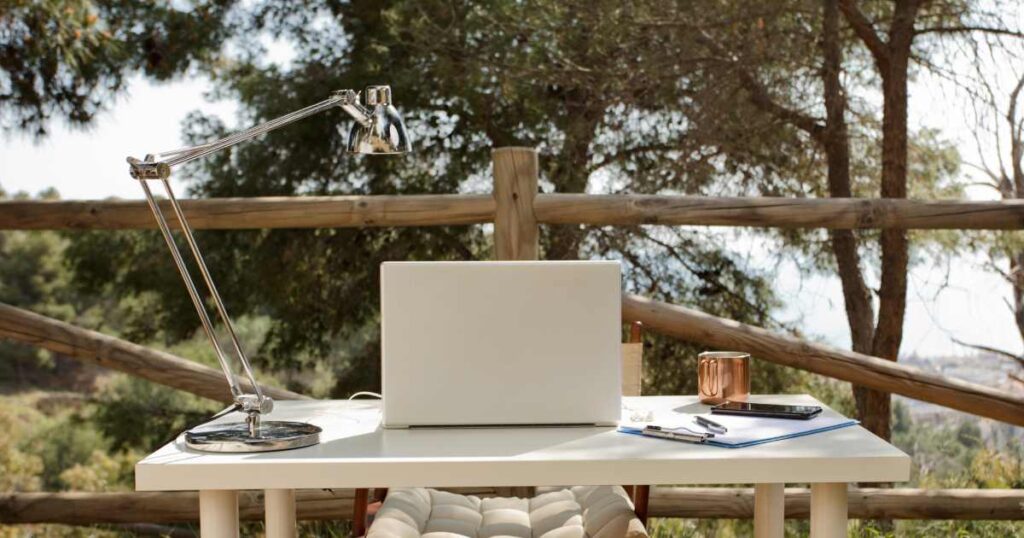
First thing first – the elephant in the room… Sri Lanka’s wifi. The biggest concern for most people planning to work remotely here is the connection.
Wifi strength and availability are still behind destinations like Thailand and Indonesia. Cafe wifi and guest-house routers can be fine for email and Slack, then fall apart the moment you join a video call. While wifi is a hurdle, it is still absolutely possible to get by in Sri Lanka as a digital nomad – if you treat mobile data as your primary connection.
Power cuts still happen outside Colombo, so ask whether your place has a generator or battery backup before you book a month.
Using SIM Card Data (and eSIMs)
A local SIM or eSIM is the reliable move – hotspot your laptop when the guest-house wifi dies mid-call. We ran both Dialog and Airtel and switched depending on which was strongest that day (it varied by town and even by street). Note: Airtel Lanka amalgamated into Dialog in August 2024; the Airtel brand can still appear at airport counters, but Dialog is the surviving operator and Airtel no longer publishes a tourist data bundle (pay-as-you-go only).
Tourist plans (tax included; conversions at about 332 LKR = $1, CBSL indicative spot around Nov 6 2026 – check the counter board before you pay):
Dialog (tourist page, re-checked Nov 6 2026): – Rs 1,399 (~$4 USD) – 20 GB / monthly – Rs 1,799 (~$5 USD) – 30 GB / monthly – Rs 2,450 (~$7 USD) – 50 GB / monthly
SLT-Mobitel (travel SIM page, re-checked Nov 6 2026): – Rs 821 (~$2.50 USD) – 15 GB / 7 days (unlimited local calls) – Rs 1,540 (~$4.50 USD) – 30 GB / 30 days – Rs 5,131 (~$15 USD) – “unlimited” data / 30 days (fair-use policy applies)
Buy a physical SIM or eSIM at the airport arrivals counters with your passport. A 30–50 GB monthly plan is cheap insurance for Zoom-heavy months.
Global travel eSIMs exist if you want data before you land – we haven’t personally used a portable hotspot here, so we can’t vouch for one.
Visas and Extensions
Tourist ETA (most nomads start here)
Almost everyone still needs an Electronic Travel Authorization before flying. Apply on Sri Lanka’s official site: eta.gov.lk. Avoid third-party “visa service” sites that charge a markup.
From May 25 2026, nationals of 40 countries – including Australia, the United States, the UK, Canada, New Zealand, India, Japan and much of the EU – get a free 30-day tourist ETA with double entry (Maldives 90 days; Singapore and Seychelles also free for 30 days under bilateral rules). Everyone still has to apply for an ETA before flying – free does not mean skip the form.
Other nationalities still pay, per the official eta.gov.lk fees page (re-checked Nov 6 2026): US$50 online / at a mission / at head office for a 30-day tourist ETA (US$60 on arrival); SAARC tourist ETA US$20 online (US$25 on arrival). Children under 12 are free for the first 30 days. Check eta.gov.lk before you travel – fees and the free list can change, and third-party “visa service” sites often mark up the same form.
When we first came as Australian and US citizens we each got a one-month tourist visa and paid for it. That fee is gone for our passports under the 2026 free scheme – but extensions are still paid.
Note: You can extend your visa right away in Sri Lanka. You don’t need to wait until it’s close to expiring like in some other countries.
Extending a Tourist Visa
A short-visit ETA can be extended up to 270 days from the date of arrival, in stages (30 days on entry, then typically 60 days, then 90 + 90). Extensions cancel if you leave during the extended period – you’d need a new ETA to come back.
You can now apply online through the Department of Immigration & Emigration’s e-Visa extension portal, or still go in person to the head office in Battaramulla, Colombo. Online is the obvious first try; keep screenshots and be ready to visit the office within a few working days if anything stalls.
When we extended in person it was confusing and long – not open on weekends, and watch public holidays (publicholidays.lk). We once took a day off work and arrived to a closed office. Staff were helpful; most of the day is waiting rooms (there’s a shop for coffee and a veggie roti).
Extension fees depend on passport and length of stay (official immigration.gov.lk visa fees, re-checked Nov 6 2026). Australia and many EU/UK/Canada passports pay USD 100 / 150 / 200 for the 31–90 / 91–180 / 181–270 day bands. For US passports the chart merges 31–90 and 91–180 into one cell at USD 100, then USD 200 for 181–270 – so there is no separate middle-band price. Confirm the live chart before you pay.
Extending is still an admin chore, but online submissions are a real upgrade since we last did this in person.
Digital Nomad Visa (new for 2026)
Sri Lanka launched a Digital Nomad Visa in early 2026. Per the Department of Immigration & Emigration’s official category sheet:
- 1 year, renewable annually
- USD 500 per year for the main applicant (same again for a spouse and for each dependent)
- Minimum USD 2,000 monthly remittance for the main applicant (plus USD 500 more per month if you have more than two dependents)
- Remote work, freelancing or a business not registered in Sri Lanka, earning from foreign clients only – no local employment
- Paperwork includes police clearance, health insurance, a medical report, and a Ministry of Digital Economy recommendation; renewals need Inland Revenue tax registration
Apply via Immigration’s Residence Visa channel (online portal / Battaramulla). Official sheet: Digital Nomad Visa Category. The sheet still requires a Ministry of Digital Economy recommendation; Immigration does not publish an official processing time. Traveler write-ups in 2026 often cite roughly 3–6 weeks end-to-end – treat that as anecdotal, not a promise, and check Immigration before you plan around a start date.
If you’re staying a few months on tourist extensions, the ETA route is usually enough. If you’re planning a full year with a spouse or kids, the Digital Nomad Visa is the option that actually spells out remote work.
Finding Accommodation in Sri Lanka
Finding places to live in Sri Lanka is still not as easy as Thailand or Bali. You won’t see many “monthly rental” signs on the street. Short-term platforms and Facebook groups are the usual starting points, and word of mouth still wins in smaller towns.
We based ourselves in Dickwella – quieter than Mirissa or Hikkaduwa, and home to Verse Collective, the coworking space we’d been hearing about. We’re not fans of reserving sight unseen, but options were thin, so a local on the beach connected us with a friend who had a rental.
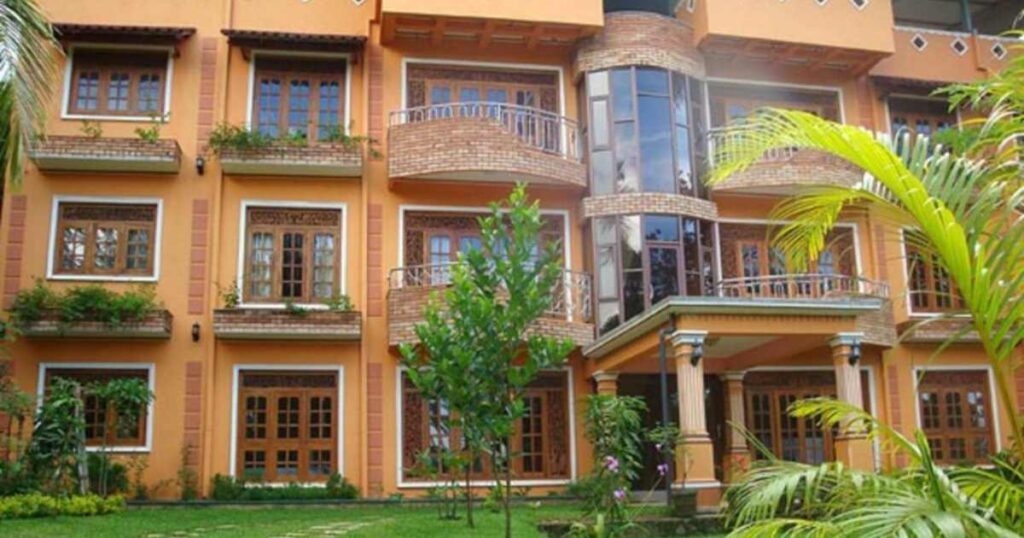
We lived at The Mount House – basic Sri Lankan-style housing and the cheapest long-term rental either of us has ever had. Not fancy, but cheeky monkeys most mornings and peacocks in the afternoons.
Price haggling is common in Sri Lanka, so don’t be afraid to negotiate.
Getting Around Sri Lanka Independently
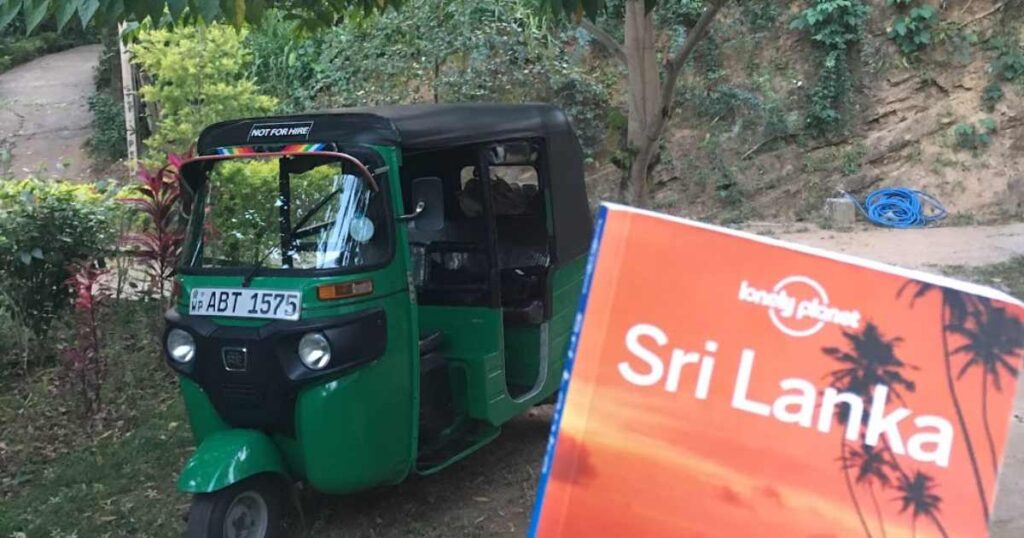
Buses, trains, taxis, PickMe, tuk-tuks and scooters will all get you around. Even small towns have tuk-tuks, so you’re rarely stuck. For longer distances we recommend public transport – the roads can be dangerous if you’re not used to them.
Motorbike Rental Sri Lanka
Renting a scooter isn’t as accessible as in Southeast Asia. You won’t see rental shops on every corner; your best bet is a hotel or guesthouse. Prices felt steep to us. In Dickwella we paid 30,000 LKR per month (about $160 USD at the then-rate) – that figure is from our stay, not a 2026 quote. Recent Hiriketiya listings (2026) often show daily scooter hires around Rs 1,500–2,200, so a month without a long-term discount can land nearer Rs 45,000–66,000 (~$135–200 at ~332 LKR/$1) before you negotiate; electric scooters can cost more. Ask locally and get the price in writing.
To ride legally as a foreigner you generally need your full home licence with motorcycle/scooter entitlement plus a Sri Lankan temporary driving licence (airport DMT counter or Department of Motor Traffic) – an International Driving Permit alone is usually treated as a translation, not a stand-alone licence. Police are strict on helmets; helmet theft is common (yes, it happened to us).
Tuk-tuk Rental Sri Lanka
If you’re planning longer distances, we highly recommend renting a tuk-tuk. Exploring Sri Lanka that way was the highlight of our time – freedom to go off the beaten track and control our own schedule.
To rent legally you’ll need a local driver’s license, which Tuk Tuk Rental organizes for you.
Heads-up: the Tuk Tuk Rental link below is a partner link, so we may earn a small commission at no extra cost to you.
If you’re interested, our coupon GOROAM usually takes a little off Regular tuktuks on tuktukrental.com – confirm the code and any % at checkout – and we’ve written a full how to tuk-tuk around Sri Lanka guide.
Sri Lanka Cost of Living for Nomads
One of the biggest pros of basing yourself in Sri Lanka is still the cost of living – though it’s not the same bargain it was when the rupee crashed in 2022 and then recovered. You’ll still be hard-pressed to find another nomad destination this scenic at this price, especially if you eat local.
Costs depend on the town, how often you eat western food, and how many weekend trips you take. As a general rule, the more local you keep your lifestyle, the cheaper Sri Lanka will be.
Our expenses (2020, Dickwella – historical)
We averaged about $500 USD per month for two – eating out every meal, drinking, and extras like Udawalawe (see whether Sri Lankan safaris are ethical). Most meals were local; breakfast at a small Dickwella place often cost well under a dollar. Rent was about $330 of that total. Visas, flights, business costs and our end-of-trip tuk-tuk were separate.
That $500 figure is what we actually spent then – not a 2026 quote.
2026 ballpark (research, not our receipts)
Recent nomad roundups (The Sri Lanka Guides Colombo notes and similar 2026 guides; supporting Numbeo/Expatistan ranges) put a single remote worker in Colombo around $800–1,200 USD / month mid-range (studio/one-bed, mix of local and cafe food, some coworking) – a research band, not our receipts. Leaner setups go lower; Hiriketiya peak season and Galle Fort push rent up. Dickwella town proper is still where we’d look for local-priced food. Conversions below use about 332 LKR = $1 (CBSL indicative USD/LKR spot around Nov 6 2026).
Vegan Nomad Food Budget
This is the Roaming Vegans angle most nomad blogs skip.
Sri Lanka is one of the most vegan-friendly countries we’ve traveled. Local meals – rice and curry, daal and roti, string hoppers, veggie kottu – are naturally plant-heavy, and asking for no fish, no egg, no milk and no ghee usually works.
A realistic vegan food budget if you eat like a local (aligned with our Sri Lanka vegan guide fact-check; ~332 LKR = $1 around Nov 6 2026):
- Local rice and curry / daal breakfast or lunch: about 350–800 LKR ($1–2.50 USD) per meal
- Western vegan cafe mains: about 1,500–4,000 LKR ($4.50–12 USD) in tourist towns
- Monthly food, mostly local, eating out: roughly $150–250 USD solo
- Monthly food if you live in beach cafes: easy to hit $400+ USD
Eat two local meals a day and save western cafes for treat nights, and Sri Lanka stays one of the cheapest vegan nomad bases going. For the full food deep-dive, start with our Sri Lanka vegan guide, then the 12 tips for vegans traveling Sri Lanka, Dickwella vegan guide and best vegan snacks in Sri Lanka.
Local Sri Lankan Food
Sri Lankan food doesn’t get the credit it deserves – overshadowed by Indian food, but it holds its own. It’s primarily vegetarian and built around daal, roti, and rice and curry, often served buffet-style with more plates than your table can fit (jackfruit, pineapple, potato and more).
Breakfast is usually daal, coconut roti and string hoppers. It takes a little getting used to, then it becomes hard to go back.
Sri Lanka’s Best Digital Nomad Towns
Not everywhere in Sri Lanka is ready for digital nomads. A few places do offer decent environments, community and infrastructure for remote workers.
1. Colombo
Good for: coworking · admin (visa office, SIMs, laptop repairs) · hospitals
Bad for: noise and pollution · beach days
Densest coworking scene and the practical hub. Not automatically the cheapest anymore – Colombo 3 / 5 rents can match south-coast tourist prices.
2. Dickwella / Hiriketiya
Good for: beaches · surfing · south-coast food
Bad for: dedicated coworking since Verse closed · peak-season Hiriketiya prices
Our base. Dickwella stayed quieter; Hiriketiya next door is now the south coast’s nomad/surf hub. Wifi is better than much of the south, but power cuts still happen. Work from cafes, coliving or your rental’s fiber.
3. Nuwara Eliya
Good for: mountain air · cooler temps · tea country · Bad for: cold nights · thin coworking
4. Tangalle
Good for: beaches · laid-back · Bad for: coworking
5. Mirissa / Weligama
Good for: surfing · social scene · whales (seasonal) · Bad for: crowds
6. Galle
Good for: fort living · architecture · cafes · Bad for: expensive · crowded · humid
Coworking Spaces in Sri Lanka
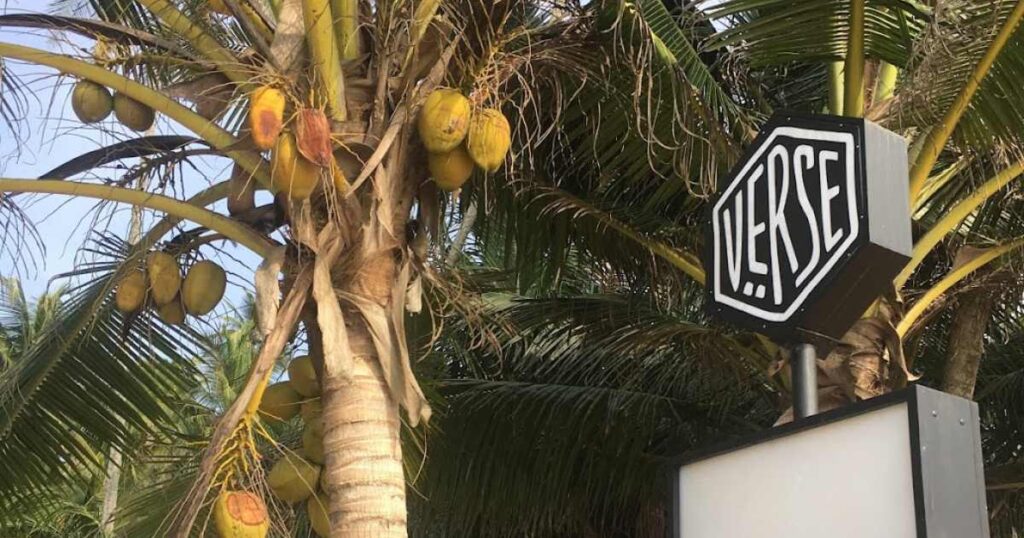
Coworking has grown since we were here, especially in Colombo – but the south coast still isn’t Chiang Mai.
Verse Collective, Dickwella [Closed]
We worked most days from Verse Collective on Dickwella Beach. At the time it was the coolest workspace we’d used – and it was free. Midday swims between calls were hard to beat. Coffee and meals were pricey; wifi struggled with 15 nomads on it, so we mostly hotspot from our SIMs. Staff ran weekly events and often worked with Animal SOS Sri Lanka.
Verse Collective (now closed). As of Nov 6 2026 the main site returns 404; traveler reports through late 2026 mark it permanently closed. We couldn’t pin a single official closure date or a clear successor on Pehebiya Road. We’re leaving our experience here because it shaped our stay – don’t plan a Dickwella base around it.
Colombo and elsewhere (2026 research)
Colombo now has a real coworking market – Hatch, HUB9 / Nest, WORX, RezG Hub and Regus-style operators among them. Published day passes we’ve seen start around Rs 2,000 (~$6 USD) – HUB9 Nest lists Rs 2,000 / day on its own site (re-checked Nov 6 2026); other spaces can run higher. On the south coast, expect cafe wifi, coliving and your own SIM hotspot. Speed-test a day before paying for a month.
Reasons To Visit Sri Lanka
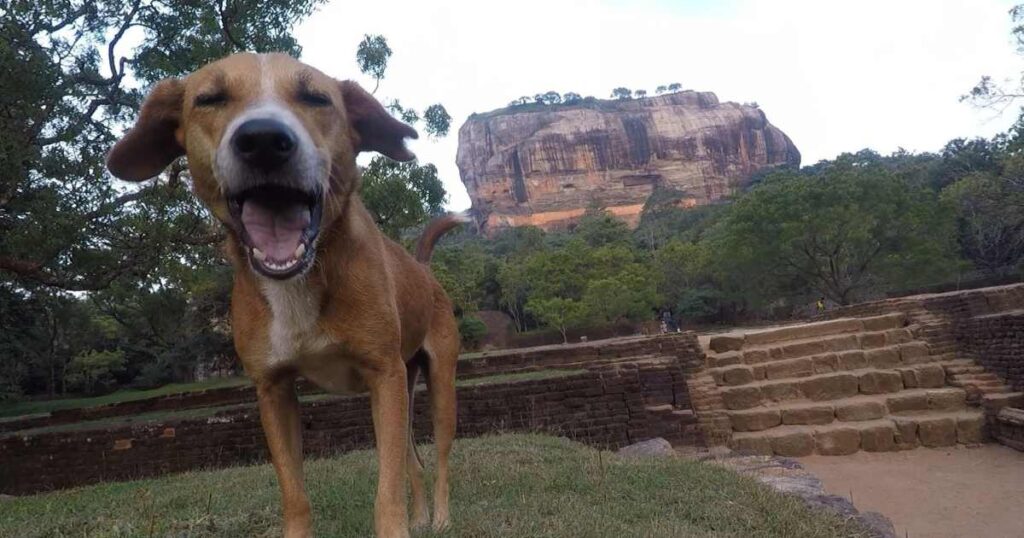
There’s so much to do in Sri Lanka that it’s actually surprising – and most of it packs into a long weekend away from the laptop.
UNESCO sites – eight of them, from Sigiriya to Anuradhapura, all doable from a south-coast or Colombo base.
Beaches – close to 1,000 miles (1,600 km) of coastline. The south is busier; the east is quieter and more seasonal.
Food – delicious, cheap when you eat local, and extremely vegan-friendly. Full detail in our Sri Lanka vegan guide.
Hikes – beach in the morning, mountains in the afternoon. The pilgrimage to Adam’s Peak for sunrise is a must.
Tea and festivals – fresh Ceylon tea in the hill country, and Kandy’s Esala Perahera if your dates line up.
Local Attitudes Towards Foreigners
Sri Lankans are among the friendliest people we’ve met on the road. No matter where we were, locals were extremely helpful – and generally, the more remote you go, the friendlier people get.
Someone might try to take advantage of foreigners now and then – keep basic wits about you. Most Sri Lankan men are respectful toward western women, and stares are usually curious rather than aggressive.
Overall, Sri Lanka feels extremely safe, and as visitors the locals make you feel right at home.
Sri Lanka for Digital Nomads: Pros and Cons
PROS
- Still a low cost of living if you eat and rent locally
- Free 30-day ETA for many passports (2026) and a real Digital Nomad Visa option
- Online visa extensions (no longer Colombo-office-only)
- Delicious, naturally vegan-friendly local food
- Tight community in south-coast hubs
- Endless nature for weekends off
CONS
- Wifi still unreliable without a dual-SIM plan
- Limited dedicated coworking outside Colombo (Verse Collective closed)
- Fewer western comforts than Thailand or Bali
- Outside Colombo, limited tech support if hardware fails
- Power outages still common in beach towns
- Peak-season south-coast prices have climbed
FAQ
Is Sri Lanka good for digital nomads in 2026?
Yes – if you bring a dual-SIM data plan, sort your visa early, and don’t expect Chiang Mai-level coworking. The food, cost (when you live locally) and weekend trip density make up for the wifi drama.
Does Sri Lanka have a digital nomad visa?
Yes. Sri Lanka’s Digital Nomad Visa (launched 2026) is one year for USD 500, needs at least USD 2,000 a month remitted for the main applicant, and only allows foreign-source remote income – no local jobs. Requirements and the Ministry of Digital Economy recommendation are on the Department of Immigration PDF; processing times are not officially published.
How much does a Sri Lanka tourist visa cost?
For Australia, the US and 38 other nationalities, the 30-day tourist ETA is free from May 25 2026 (you still apply on eta.gov.lk before you fly). Other nationalities typically pay about US$50 online or US$60 on arrival. Extensions beyond 30 days are paid by passport and length of stay – check the official Immigration fee chart before you go.
How much is a tourist SIM in Sri Lanka?
Dialog’s tourist plans run about Rs 1,399–2,450 ($4–7 USD) for 20–50 GB per month; SLT-Mobitel’s 30-day 30 GB plan is about Rs 1,540. Buy at the airport with your passport – prices are tax-included on the operator pages we checked in Nov 2026.
Conclusion
Sri Lanka isn’t the easiest digital nomad destination – wifi and admin will test your patience – but it’s one of the most rewarding. Cheap local vegan food, friendly people, and a ridiculous density of beaches, temples and hill-country weekends make the rough edges worth it.
Bring a solid data plan, extend or apply for the Digital Nomad Visa if you’re staying long, and eat rice and curry like you mean it.






Feel like I know a little about Sri Lanka now. Thanks
You’re welcome. It’s such a fantastic country – Hope you get the chance to make it out there yourself.
Interesting take on the attitude towards foreigners. Most solo female travelers I met whilst in Lanka and elsewhere in SE Asia found it extremely uncomfortable dealing with men there. I guess it’s different when you’re rolling as a couple?
Personally as a male I found most locals friendly, maybe a little too friendly – a guide I used only for one day still texts me occasionally a year later. Lol. Great country though.
Thanks for your comment, Tony.
I think you’re onto something in regards to SL being different for women in a couple than solo, however, generally I felt more respect from local men in Sri Lanka than in India overall when it came to respecting women,
I think a big part of it came from the fact we were based in a very local area. When we were in more tourist-dense places like Negombo, there definitely seemed to be more of a seedy undertone.
I also have Sri Lankan acquaintances who still message me random check-ups, haha.
Totally a fantastic and interesting country.
Great tips and thanks for sharing your experiences living as DN in SL.
One question – in terms of workout facilities, did you guys encounter any gym locations? This is a odd one, but we are in Bali and considering moving to other locations because our emergency stay permit is expiring. And if you been to Bali, Canggu has a massive crossfit community and plenty of gyms around, just want to know if there’s such a community in SL.
Hey Bernard,
Thanks for your comment. The gym culture in Sri Lanka is nothing like in Bali, unfortunately.
You will find some gyms in the main city, Colombo, but in my opinion, Colombo isn’t the reason DNs visit Sri Lanka, and you’ll either want to head to the southern beaches or mountains.
In Dickwella there were no gyms, so we made do with home workouts. You might find luck in Mirissa or Ella, which are big tourist hubs.
I hope that helps!
Like!! Really appreciate you sharing this blog post.Really thank you! Keep writing.