Updated October 2026: Prices and exchange rates refreshed after the 2022 currency crisis, Ella and Colombo sections expanded with named venues, and Dickwella spots rechecked. This is our Sri Lanka vegan hub – link out to the 12 tips, Dickwella guide and snacks guide for the deep dives.
Sri Lanka is one of the most vegan-friendly destinations in the world, but there’s still plenty to know if you’re visiting the beautiful Ceylon country for the first time.
The best thing about being vegan in Sri Lanka is so many local meals are naturally vegan. And even if it’s not vegan, it’s usually easy to fix.
Sri Lanka is also still one of the cheapest places to eat on earth – though prices look different in rupees than they did when we were last based there. A filling local meal still lands around $1–2.50 USD.
We spent early 2020 remote working on the south coast and touring the island by tuktuk. This guide is the hub: food, places and ethical tourism. For the practical “how to order / what to watch for” list, see our 12 tips for vegans traveling Sri Lanka.
Table of Contents
Vegan Sri Lanka Overview
| Sri Lankan words for vegan | Sinhala: Vigan (loanword). Tamil speakers often say Caiva Unavu for vegetarian/Saivite food – spell out “no egg, no milk, no fish, no ghee” either way |
| Best vegan locations | Colombo, Ella, Dickwella–Hiriketiya |
| Avg. price of local meal | About 350–800 LKR ($1–2.50 USD) at ~330 LKR = $1 |
| Avg. price at western vegan restaurant | About 1,500–4,000 LKR ($4.50–12 USD) in tourist towns |
| Popular tropical fruit | Jackfruit, king coconut, durian, mangoes |
| Popular vegan ingredients | Lentils (daal), turmeric, potatoes, jackfruit (polos), eggplant, pineapple, coconut milk |
| Common non-vegan ingredients | Ghee, Maldive fish, shrimp paste, curd, eggs |
Some links in this post are affiliate links – as an Amazon Associate I earn from qualifying purchases, at no extra cost to you.
Get your copy of Lonely Planet Sri Lanka (17th edition).
Sri Lanka’s Vegetarian Culture
Sri Lanka is a culturally diverse country, which is one of the reasons it’s so appealing for visitors.
The country is made up of a Sinhala (Buddhist) majority, followed by Tamils (Hindus) and Muslims. This diversity leads to a fascinating blend of culture, religious buildings and ceremonies… and of course, food.
The Sinhalese and Tamil communities eat mostly vegetarian. As Sinhalese make up about 74% and Sri Lankan Tamils about 12% of the population (2024 census), you’ll be surrounded by vegetarian (and vegan) food.
It’s also a good idea to seek out specific Hindu communities in the northern and eastern regions where you’ll find even more vegan eats.
Most locals still aren’t familiar with the word “vegan,” even if the plate in front of them already is. Saying “100% vegetarian – no egg, no milk, no fish, no ghee” usually gets you there. That’s tip #1 in our 12 tips post – keep that post bookmarked for the travel-day details.
Eating Vegan in Sri Lanka
When it comes to local Sri Lankan food, it’s quality over quantity.
Sri Lanka doesn’t have a wide array of local dishes – but what it does have is more than enough.
Local food is commonly served buffet style and you only pay for what you eat.
Sometimes locals will personally serve plates of food to foreigners at local buffets as a kind gesture, but don’t fret about the amount of food put on your table. You won’t be charged for the food you don’t eat.
Sri Lanka’s Most Popular Meals
The two staples of Sri Lankan food are daal and Sri Lankan rice and curry.
Sri Lankan rice and curry is not as simple as it sounds. You’ll usually be served four or more unique and flavorsome curries. I’ve never had so many single plates of food on my table as I had in Sri Lanka.
Daal is usually eaten with roti, which is an Indian bread similar to naan.
There are two different types of roti: coconut roti and paratha roti.
Coconut roti is always circular shaped and has a thick doughy texture. Whereas paratha roti is thin and flaky. Both are delicious.
Where to Eat?
You can always find somewhere to eat in Sri Lanka.
Local buffets and bakeries are everywhere.
Sometimes the cheapest meals are found hidden inside tiny convenience stores. While these “restaurants” appear extremely cramped, they serve some of the tastiest and most affordable meals in Sri Lanka.
Restaurant Etiquette
Eating in Sri Lanka is an experience, especially for first-timers.
Locals eat with their hands, but most restaurants will provide cutlery if you prefer.
Every restaurant has a trough for washing hands before and after eating – and with all the turmeric in Sri Lankan food, make sure you scrub well, else you’ll have yellow hands.
It’s not uncommon for locals to sit next to you in a restaurant – even if tables are available. Sri Lankans don’t share the western mentality when it comes to personal space and sharing tables is normal. You’ll likely share a few smiles and maybe even a laugh at how you’re eating.
You won’t always decide what you’re eating, either. Local waiters sometimes get excited when foreigners dine at their restaurants and they will automatically serve you what they think you’ll like.
But you’ll almost always only pay for what you actually eat.
Tipping is common in Sri Lanka, but not always expected. Even tipping small amounts is always received with gratitude.
Sri Lanka’s Hidden Non-Vegan Ingredients
The most common non-vegan ingredient in Sri Lankan food is ghee. Ghee is a form of butter made from animal fats and is used to cook Sri Lankan curries.
Like all butter, it’s non-essential to meals, so simply asking for no ghee doesn’t cause many issues at restaurants.
Another hidden ingredient, which caught us by surprise, was the Maldive fish inside coconut sambol. Somewhat naively, we assumed coconut sambol was solely made up of coconut meat. It wasn’t until after eating this dish, we found out it commonly contains fish.
Some Sri Lankan curries contain shrimp paste, so be mindful of that when ordering.
Watch for curd (buffalo yogurt) on the side of some plates and eggs in hoppers, pancakes and bakery short eats.
If you pay close attention to ghee, shrimp paste, Maldive fish, curd and eggs, you shouldn’t have any issues eating vegan in Sri Lanka.
Sri Lankan Breakfast
Local Sri Lankan breakfast is delicious, but it’s very different from a typical western breakfast.
Expect string hoppers, daal and coconut roti as standard. You might also be served hoppers, coconut sambol (check if it’s vegan) and fresh bread.
While breakfast isn’t always spicy in Sri Lanka, it often is. It took me a few times to get used to a spicy breakfast – and now I love it.
String Hoppers
String hoppers are weirdly good.
While they don’t appear overly appetizing, these oddly shaped noodles are a staple of Sri Lankan breakfasts. They are made from rice flour and are often eaten with daal or curry and, of course, with your hands.
Daal and Roti
The simplest and probably tastiest of Sri Lanka breakfasts is to dip roti into daal (Sri Lankan lentil curry) and repeat in a foodie’s bliss.
Coconut Pancakes
These are not your typical pancakes.
A rolled-up yellow pancake is a common item at breakfast or on the go. They are very sweet and resemble more of a stuffed crepe than a pancake.
It can be common to make these with eggs, so check before you eat.
Sri Lankan Lunch and Dinner
There is little variation between meals in Sri Lanka. We would often eat the same meal for breakfast, lunch and dinner – and we’re not complaining.

Sri Lankan Rice & Curry
Sri Lankan rice and curry is everywhere in Sri Lanka. While there are some meat options, it’s most commonly made vegetarian/vegan depending on whether ghee is used.
There are two ways you’ll eat rice and curry. One is at a buffet, where you’ll serve yourself on a single plate. The other is more likely at a restaurant where you’ll be served anywhere between 4–8 plates of varying curries.
Common curries are:
- Jackfruit curry (polos)
- Daal fry
- Potato curry
- Pineapple curry
- Eggplant curry
Kottu

Kottu is chopped up roti served with veggies.
The wonderfully obnoxious dish, kottu, can be heard being prepared from the streets as the clang of a cook chopping roti into hundreds of pieces.
Veggie kottu is one of the cheapest meals you’ll find – but ask for no egg (and no ghee if they use it). Egg is commonly added even to vegetable kottu.
Daal and Roti
A breakfast, lunch and dinner staple. We couldn’t get enough of daal and roti, no matter the time of day or night.
Street Food and Snacks
You don’t have to look far to find vegan snacks in Sri Lanka.
Small stalls and shopfronts serving hot and cold snacks line almost every town. The full rundown is in our 8 vegan snacks available everywhere in Sri Lanka post – here’s the short list we lived on:
- Dal vada – fried lentil fritters. Get them fresh; they dry out fast.
- Hoppers – dosa-like bowls of rice batter. Skip egg hoppers; add peanut butter if you’re on the go (we did).
- Veggie roti – everywhere: trains, streets, restaurants.
- Sri Lankan pancakes – those sweet yellow rolls. Check for eggs.
- Medu vada – crispy lentil donuts.
- Peanuts and roasted chickpeas – sold in little cups by the roadside (ask for chili).
- Coconut roti – for dipping or as quick carbs.
- Tropical fruit and king coconuts – juice stalls and fruit stands on every route.
You can also find popular vegan snacks from local convenience stores too.
Best Places for Vegans in Sri Lanka
The beauty of Sri Lanka is you can go anywhere in the country and you won’t be too limited by lack of vegan food.
However, there are still areas of the country that are better than others – especially if you’re in the country for a long time and want to enjoy some western food comforts.
Dickwella (and Hiriketiya)


We spent early 2020 remote working in the Dickwella–Hiriketiya area.
This southern coastal town is off the main tourist trail and is truly an unknown gem – though Hiriketiya’s surf scene has grown a lot since we were based there.
While being a small town, there are a lot of great vegan eats including vegan burgers, plant-based poke bowls and Middle Eastern choices. Full venue write-ups (with our photos) live in our Dickwella vegan guide. Here’s the 2026 status check on the places we used most:
- Anushka’s Place (no-name local buffet) near Verse Collective – our everyday breakfast/lunch hut in 2020. Daal, hoppers, string hoppers, coconut roti, potato curry and rice and curry. We haven’t confirmed it publicly since 2020 – ask locals near Verse / Tangalle Rd before you go.
- Verse Collective – free coworking drew us to Dickwella; vegan section on the menu (burger was my repeat order). The cafe site still lists daily hours (about 7:30am–10pm) with plant milks, but HappyCow reported it closed in June 2025 – check before you go.
- Jayantha Restaurant – local rice-and-curry buffet we used for proximity in 2020. Still listed on Tangalle Rd in some 2026 directories, but we couldn’t firmly confirm open status – ask locally.
- Malu Poke (Hiriketiya Beach) – make-your-own bowls, tofu/tempeh, plant milk coffee. Listings put hours around 8am–9pm; 2025 reviews still praise the teriyaki tofu bowls. Confirm vegan labeling when you order.
- Smoke & Bitters – cocktail bar overlooking Dickwella beach; we mostly drank. Still open evenings and now a well-known name on Asia’s cocktail lists. Current food menu includes several marked vegan plates (e.g. burnt leeks, charcoal cabbage, smoked pumpkin).
- Salt House – yoga hotel restaurant; falafel was the only one we saw in town in 2020. Reopened after renovations in July 2026 with vegan salads, falafel and tofu still listed; dishes can be made vegan on request.
- Mom and Dad’s – local spot in 2020; the owner happily made everything vegan (guacamole roti was our go-to). We couldn’t find a clear 2025–26 restaurant listing under that name (a nearby “Mum & Dad House” guesthouse is unrelated) – treat as unconfirmed.
Newer names we haven’t eaten at ourselves, but that show up in 2025–26 vegan listings for Hiriketiya:
- The Jackfruit Vegan Cafe (formerly White Peacock / part of Bunk 15) – fully vegan cafe with traveler reviews into early 2026. HappyCow marked it closed in early October 2026 – status unclear; check before you go.
- Bunch – vegetarian cafe on Hiriketiya Beach Rd (about 8am–3:30pm). Many dishes vegan by default or adaptable; house oat milk / plant milks for coffee. Sep 2026 reviews still strong.
Dickwella is good for: vegan food, surfing, quiet beaches, getting away from tourists.
Dickwella is bad for: partying, shopping, fancy accommodation.
Find accommodation in Dickwella here.
Colombo

Outside the Red Mosque, Colombo.
Colombo is perhaps the best place for vegan food as it’s the largest city in the country.
Our favorite thing about Colombo was the huge Indian and Arabic communities that live there. This, of course, means lots of Indian and Middle Eastern food options available.
Named spots worth knowing in 2026 (we didn’t eat at all of these – flagged where research-only):
- Ranbath Organic (No. 11 Park Terrace / Park Rd, Colombo 5) – fully vegan, organic Sri Lankan rice and curry, juice bar. Relocated from Sri Sambuddhathva Jayanthi Mawatha; open daily about 6am–9pm. Buffet-style plates often around 750 LKR for rice and several curries. HappyCow reviews into Oct 2026.
- Shanmugas (53/3 Ramakrishna Rd, Wellawatta) – long-running vegetarian South/North Indian; lunch buffet. Menu includes ghee and dairy dishes – ask for no ghee / no dairy.
- Sriyani (131 Second Cross Street, Pettah) – vegan-friendly South Indian and Sri Lankan; dosai, vada, rice curry. Cheap and local. Confirm no ghee/dairy.
- Thalis Restaurant (155 Park Rd, Colombo 5) – vegetarian thalis and dosai; some dishes use ghee or curd – ask. Open into the evening.
- Indo Ceylon Cafe – Dosa King (284 Galle Road, Kollupitiya) – mostly vegan South Asian; locals’ spot. Ask for no ghee.
Find accommodation in Colombo.
Colombo is good for: cultural foods, cheap meals, markets.
Colombo is bad for: natural beauty, pollution, quiet time.
Ella

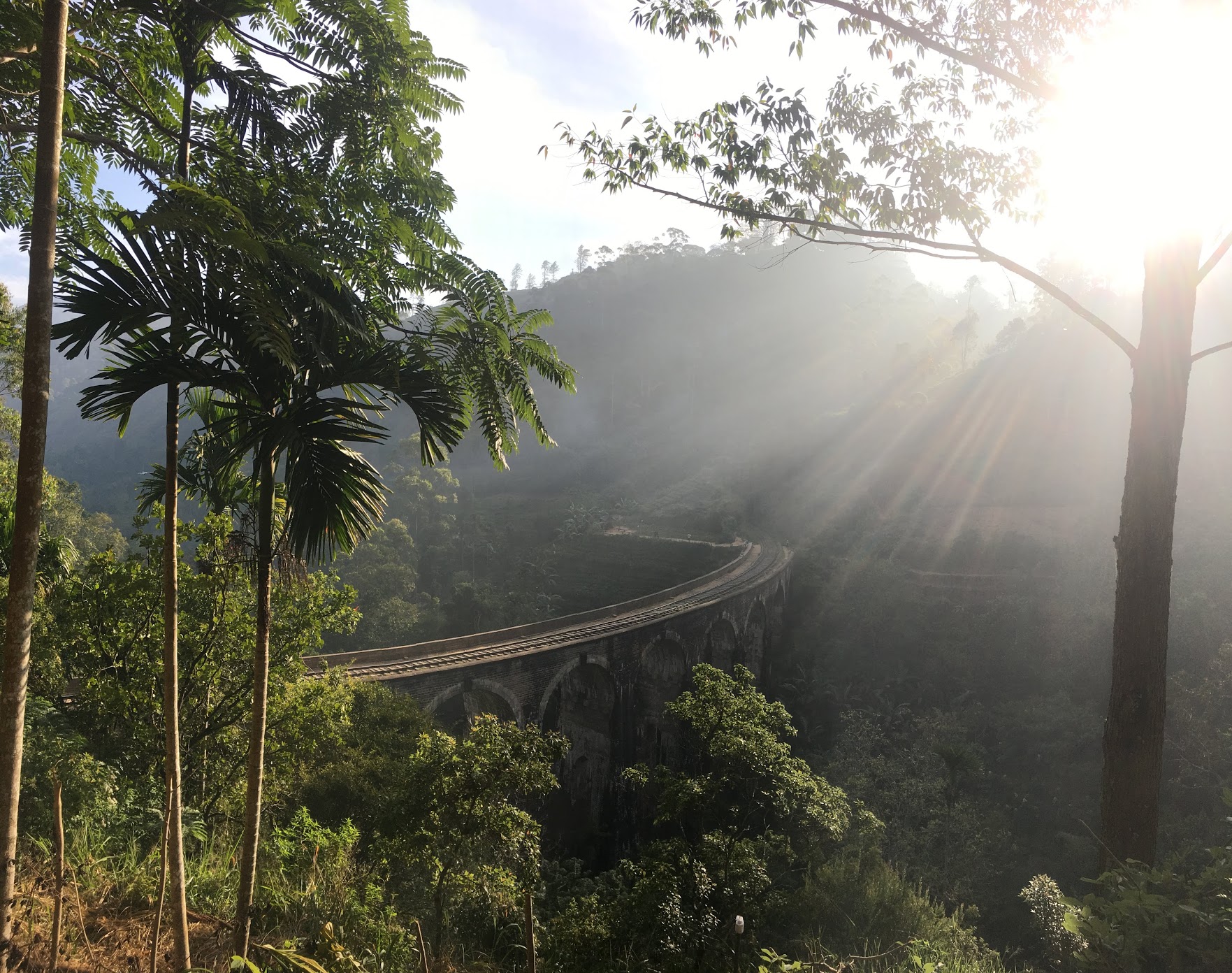
Nine Arch Bridge, Ella.
As probably the most popular tourist destination in Sri Lanka, it’s no wonder Ella is thriving as a vegan destination.
There are plenty of western food options in Ella, but you’ll find prices among the highest in the country here.
If you don’t mind hordes of tourists and higher prices, Ella is a beautiful town close to gorgeous hikes.
Named vegan and vegan-friendly spots for 2026 (research unless noted):
- Herb Haus (Passara Rd) – vegetarian cafe with strong vegan options (not fully vegan – eggs, curd and honey appear on the menu). Brunch wraps, bowls and plant-friendly mains often around 1,650–2,650 LKR. Site lists about 8am–10pm daily.
- Matey Hut (near the tunnel / edge of town) – local vegetable rice and curry and veggie kottu at local prices. A traveler favorite for vegan Sri Lankan food; busy queues into 2026. Older HappyCow listing said closed Sundays – confirm hours if you go on a Sunday.
- Rainbow Cafe (main street / Bandarawela Rd) – smoothie bowls and marked vegan options; mix of local and western.
- Cafe Chill – touristy roadside cafe. Vegetarian lamprais appears on the menu, but lamprais often includes egg – ask for a fully plant-based version before you order.
- MozzarElla / Hiking Bar – vegan pizza options when you need a break from curry (vegan pies listed on the MozzarElla order menu; Hiking Bar upstairs for drinks/live music).
Cooking class: Ella Spice Garden still runs vegan-friendly Sri Lankan cooking classes (spice garden tour + meal, about 3 hours). Official site lists $30 USD per person cash on arrival; book ahead on WhatsApp.
Ella is good for: vegan food, natural beauty, socializing, things to do.
Ella is bad for: expensive meals, lots of tourists, traffic.
Tangalle
Tangalle is often skipped by those on the regular tourist trail.
The small beach town doesn’t offer much beyond its quiet beaches and relaxed feel. However, a small community of yogis has given the town a little vegan edge.
You’ll find a few cafes offering plant-based milks and some vegan breakfasts – HappyCow lists spots such as Cafe Salt Breeze and KōPI if you want named options; we haven’t eaten at them ourselves.
Find accommodation in Tangalle.
Tangalle is good for: relaxing, beaches, yoga.
Tangalle is bad for: partying, meeting people.
Galle Fort
I didn’t expect Galle Fort to hold vegan options, but I was wrong.
The most visited tourist destination in Sri Lanka has lots of cool cafes and restaurants offering vegan options.
This is due to the high volume of western tourists visiting the Fort.
If you’re planning on eating here, it’ll cost you. Galle Fort tourist restaurants often sit in a similar premium band to Ella (mains often 2,000–4,000 LKR inside the walls) – local spots just outside are much cheaper. Lucky Fort is a frequently recommended rice-and-curry option that can be veganized – ask about ghee and fish.
Galle Fort is good for: unique cafes with vegan options, beautiful architecture, history.
Galle Fort is bad for: expensive.
Sri Lankan Supermarkets for Vegans
Supermarkets are small and limited in Sri Lanka, especially outside of Colombo and major tourist hubs.
Due to this, we didn’t have much luck finding specialty vegan options in Sri Lankan supermarkets – especially as we were based in Dickwella for most of our time and the one supermarket was very limited.
We rarely cooked our own meals in Sri Lanka due to limited supermarket options and the insanely cheap price of eating out.
Leading Supermarkets in Sri Lanka
- Cargills Food City
- Keells Super
- LAUGFS Supermarket (often pronounced “laughs,” but branded LAUGFS)
Supermarkets are one of the rare places where debit/credit cards are accepted.
A lot of Sri Lankan supermarkets also have a pharmacy and liquor store attached. The beer is cheapest from supermarkets.
Vegan Tourism in Sri Lanka
Vegan Cooking Classes
Almost every town where there are tourists you’ll find cooking classes.
Cooking classes mostly involve cooking vegetarian meals, however, it’s worth approaching the cook at least 24 hours before the class to ensure they have the right vegan ingredients.
Ella Spice Garden is one of the most popular cooking classes in Sri Lanka and caters to vegans ($30 USD per person as of late 2026; cash on arrival).
Ethics of a Jeep Safari

We had – and still have – ethical questions regarding Sri Lanka’s wildlife safaris.
In early 2020, we took a jeep safari at Udawalawe National Park. You can find our ethical review of Udawalawe here.
The main concern when it comes to Sri Lankan jeep safaris is the overcrowding of wildlife. This is particularly concerning at Yala, which is why we chose Udawalawe instead.
At the end of the day, it’s important to do your research when considering jeep safaris. I feel the fewer tourists, the more ethical the safari becomes.
Travel the Country by Tuktuk

You might be used to riding in the back of tuktuks around Asia, but in Sri Lanka it’s possible to become your own tuktuk driver and tour the country in your very own tuktuk.
We did this early 2020 and it was the highlight of our time in Sri Lanka. We wrote this guide on how to rent a tuktuk in Sri Lanka, which includes our reader discount code GOROAM. Partner codes with TukTuk Rental typically take 5% off Regular tuktuks – confirm the code still applies at checkout.

Is Renting a Tuktuk Ethical?
Before renting a tuktuk in Sri Lanka we wanted to ensure we wouldn’t be taking business out of the local Sri Lankan economy.
After all, tourism plays a big role for locals and we wanted to ensure our money was used to help not hinder.
We rented our tuktuk from TukTuk Rental. This business links local tuktuk owners with customers and the money goes back to the owners. You can read up on TukTuk Rental’s about page – they still describe themselves as a social business that pays owners above the regular rate.
FAQ: Vegan Travel in Sri Lanka
Is Sri Lanka good for vegans?
Yes. It’s one of the easiest countries in Asia for vegan travel. Local rice and curry, daal, veggie kottu, hoppers and string hoppers are everywhere – just watch for ghee, Maldive fish, shrimp paste, curd and eggs.
How much does a vegan meal cost in Sri Lanka in 2026?
A local plate still runs roughly 350–800 LKR ($1–2.50 USD). Western-style vegan cafe meals in tourist towns are more like 1,500–4,000 LKR ($4.50–12 USD).
What should vegans avoid in Sri Lankan food?
Ghee in curries, Maldive fish in coconut sambol, shrimp paste in some curries, curd on the side, and eggs in hoppers, pancakes and bakery snacks. Ask out loud – “vegan” alone often isn’t enough.
Where are the best places for vegan food in Sri Lanka?
Colombo for Indian/Tamil vegetarian restaurants and Ranbath’s fully vegan Sri Lankan food; Ella for tourist cafes plus cheap local rice and curry; Dickwella–Hiriketiya for a mix of local buffets and western vegan (see our Dickwella guide).
Do locals understand the word vegan?
Often no. Vegetarianism is widely understood; veganism less so. Spell out no egg, no milk, no fish, no ghee. More of that in our 12 tips.
Sri Lanka really is a vegan traveler’s dream once you know the few traps. Eat local, ask the three questions (ghee, Maldive fish, egg), and you’ll eat well for almost nothing.
Did we miss your go-to vegan spot in Ella, Colombo or on the south coast? Let us know in the comments!